


Couldn't load pickup availability
For coffee lovers accustomed to all the subtleties of a good specialty coffee who refuse to make concessions, no matter the situation
Good coffee. Anywhere. Any time.
The work of two legendary producers from Honduras.
A delicious coffee combining fruity depth, achieved through meticulous fermentation techniques, and high-quality beans from careful cultivation.
Aromatic profile of chocolate and fresh fig.
Available in 2 formats:
- Box of 5 sachets
- Carton of 30 bulk sachets


More information

Why this product?
For coffee lovers accustomed to all the subtleties of a good specialty coffee who refuse to compromise, no matter the situation
No matter what, no matter when, no matter where
This one is interesting.
In the cup, we perceive notes that hint at the taste this Catuai would have had if the mucilage had been mechanically removed immediately after harvesting and if the coffee had been spread out to dry. These are warm chocolate notes, with a slight herbaceous touch in the background. We also perceive an additional layer of fruity aromas, such as raisin, fig, and prune. This most likely comes from a well-executed pre-wash fermentation.
And this is where it gets interesting. A few years ago, when buying a washed coffee, one would expect a coffee with very few dried or fermented fruit aromas. But increasingly, washed coffees are becoming truly fruity, even reminding one of naturally processed coffees! More and more, producers are carrying out oxidation or fermentation, either on the whole fruit or after depulping, to add aromatic complexity to the coffee. They then wash and dry the coffee in a clean parchment. This is also one of the reasons why we use the following terminology:
Dried in whole fruit = Natural process
Dried with mucilage = Honey process
Dried in clean parchment = Washed process
Dried in beans = Giling Basah
The advantage of washing and drying the beans in clean parchment is therefore that the fermentation process is largely delayed. This allows for better control of the result and avoids overly fermented coffees with a vinegary taste.
We love this coffee, the fruit of many years of effort, trial and error, the fruit of the labor of two legendary producers.
Bravo to them.
I hope you enjoy it!
Paul Arnephy
Technical Information
Producers: Marysabel Caballero & Moises Herrera
Farms: Several of their family farms located near their wet mill, called Xinacla
Location: Marcala, Honduras
Species: Arabica
Cultivar: Catuai
Process: Washed
Drying: Drying beds
Altitude: 1,400 - 1,600m
Harvest type: Manual
Importer: Nordic Approach
Green coffee moisture content at purchase: 9.5%
FOB USD: $10.58
History
Marysabel Caballero and her husband, Moises Herrera, are second and third-generation coffee producers, respectively. They have been recognized several times for their commitment to developing quality coffee in Honduras. We have known the family since the mid-2000s, and Nordic Approach started sourcing coffee from them in 2012.
Marysabel’s father, Don Fabio Caballero, inherited vast tracts of land in and around Marcala from his own father, who was one of the pioneers of coffee growing in Honduras. Marcala is located in the southeast of Honduras.
After many years of low earnings, he decided to transfer his land to his children, specifically his daughter Marysabel and her husband. Moises also incorporated his own farms into the family business, and together they own close to 200 hectares of cultivated land, spread across 17 different farms.
All their farms are located in the immediate vicinity of their “beneficio” (wet mill), Xinacla. This is a central mill where they deliver their cherries and where the coffee is processed. They generally keep the production of each farm separate, except when the volume harvested on a given day is too low. In that case, they combine the harvests from different farms. We call these blends "Caballero" without assigning them an additional name in our catalogue. The quality can easily compete with that of coffees from a single block or a single farm, but these coffees are blended to create slightly larger lots.
Their farms have clay soil, and their main variety is Catuai. They also grow other varieties such as Java, Pacamara, and Geishas. The areas where the farms are located are generally humid and windy. Some farms are shaded, others are not. The terrain is a mix of flat plateaus and slopes, with moderate to steep inclines.
Everything they do on their farms is documented. They dedicate a lot of time and resources to acquiring new equipment and planting new varieties, which ultimately allows them to improve the quality of their coffee.
Marysabel and Moises have always focused on quality, which earned them 3rd place in the annual SCAA "Coffee Of The Year" competition in 2010. They have also distinguished themselves at the Cup of Excellence for several years, being among the few producers in their region to participate.
The Caballeros are fully committed to making their farms environmentally sustainable. On their farms, they focus on improving soil quality to ensure a healthy growing environment for their coffee plants.
They produce organic fertilizer from cow and chicken manure, mixed with coffee cherry pulp and other organic materials. This fertilizer is used in addition to mineral fertilizers, ensuring that the coffee plants receive all the nutrients they need. Oranges, avocados, flowers, bananas, and other fruits are also grown on the farms, mainly for the consumption of cherry pickers. The biodiversity present on the farms also ensures better growing conditions and shade for the coffee plants.
Extraction tips
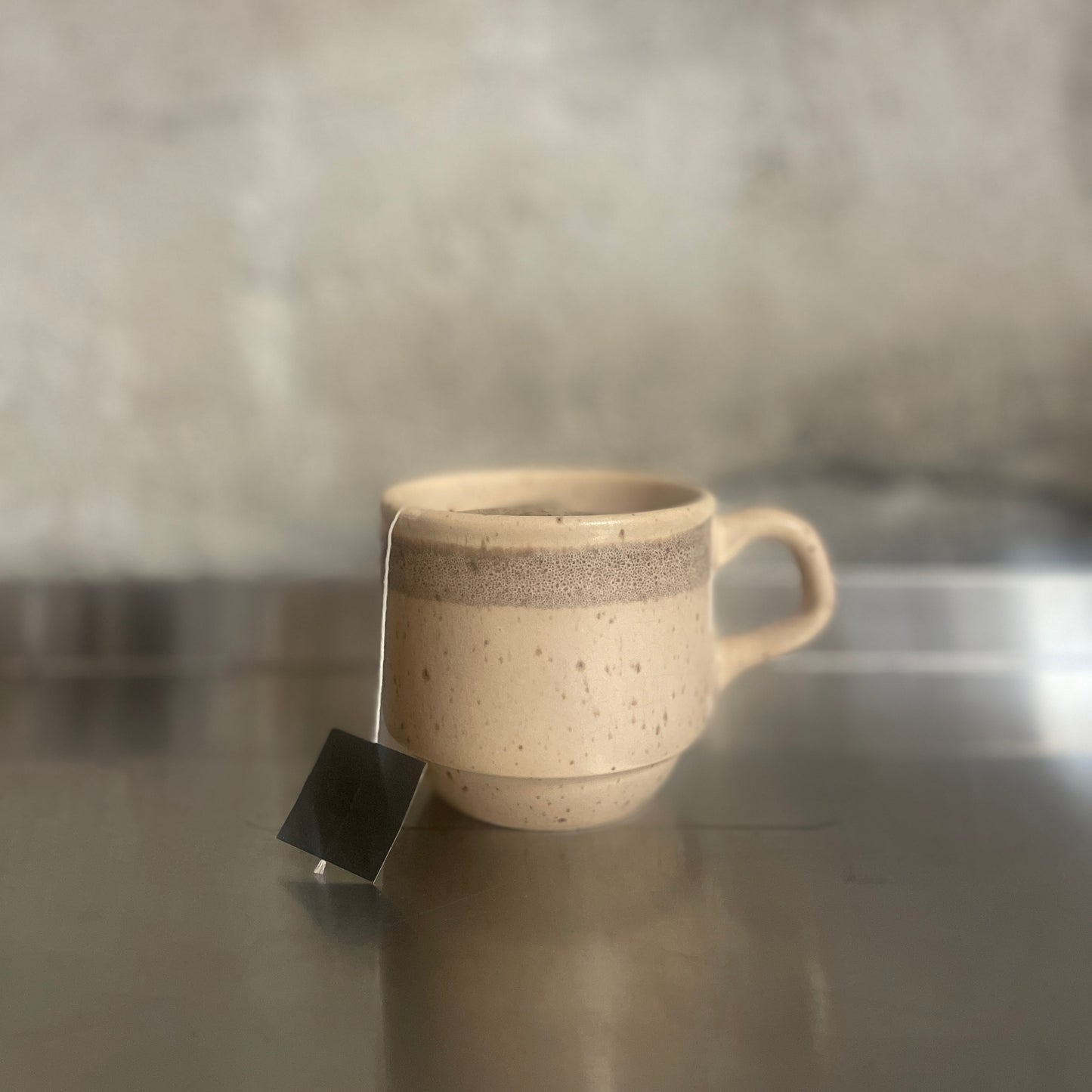
1. Remove the sachet from
its packaging and place
it in a cup
2. Pour approximately 160 ml
of boiling water
over the sachet
3. Shake gently and
let steep for
approximately 4 minutes
4. ENJOY !!!